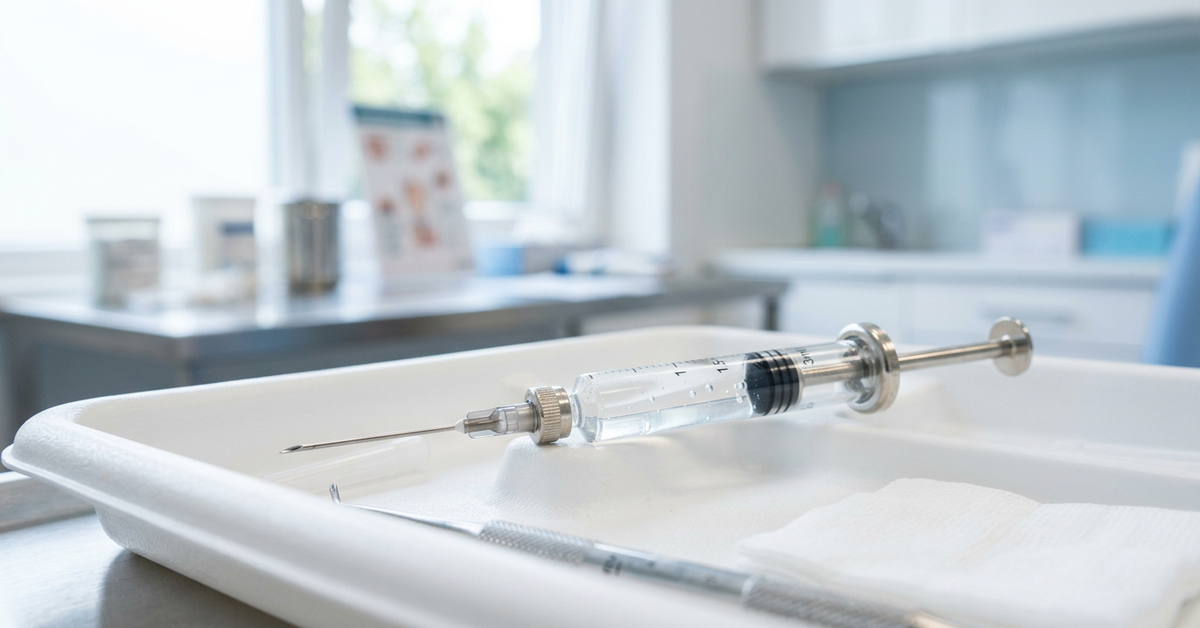
Hyaluronic acid (HA) filler is a smooth gel made from hyaluronic acid, a sugar molecule your body naturally produces to keep skin hydrated and supported. Injected beneath the skin, it restores age-related volume loss, smooths lines and folds, and draws in water for hydration. Results are visible immediately, last about 6 to 18 months depending on the product and area, and are reversible — they can be dissolved with the enzyme hyaluronidase.
If you have ever wondered, "What is hyaluronic acid filler and how does it work?" you are asking exactly the right question before considering any injectable treatment. Hyaluronic acid (HA) fillers are among the most widely performed cosmetic dermatology procedures, and understanding the science behind them helps you make confident, informed decisions about your face.
At Purely Medspa in Back Bay, Boston, we believe clinical transparency matters. This guide breaks down what HA filler is, how it functions at a molecular level, which brands lead the market, and what you can expect from treatment day through recovery.
What Is Hyaluronic Acid Filler?
What Is Hyaluronic Acid Filler?
Hyaluronic acid is a naturally occurring glycosaminoglycan, a high-molecular-weight polysaccharide found in your skin, eyes, and connective tissue throughout the body. It plays a central role in maintaining skin hydration and structural support. As we age, HA levels decrease, contributing to volume loss, deeper lines, and changes in facial contours.
Because HA is not species- or tissue-specific, it is theoretically non-immunogenic and well-tolerated as an injectable material. A dermal filler is an FDA-regulated Class III medical device implanted to restore volume, smooth lines, and enhance facial contours. HA fillers combine naturally occurring HA with cross-linking technology to create an injectable gel that replaces volume lost to aging.
These fillers are available only by prescription and must be administered by licensed healthcare providers. This aligns directly with our nurse-practitioner-led, physician-supervised model at Purely Medspa. HA fillers are popular because of their low allergic response, ease of injection, rapid recovery, and immediate results.
How Hyaluronic Acid Fillers Work: Mechanism of Action
HA fillers work through two complementary mechanisms. First, mechanical volumization: the gel physically occupies space in the dermis or subcutaneous tissue, lifting and filling depressions. Second, hygroscopic hydration: HA molecules attract and bind water from surrounding tissue, further increasing volume and improving skin quality. The HA molecule can hold up to 1,000 times its weight in water.
The hydrophilic nature of HA comes from its highly anionic properties, which allow it to attract water, swell, and provide structural support. Cross-linking is the chemical process that transforms liquid HA into a semi-solid gel capable of persisting in tissue for months. Agents like BDDE (1,4-butanediol diglycidyl ether) chemically bond HA molecules together, creating a more stable gel that resists rapid degradation, as described in the NCBI Bookshelf HA filler chapter.
The type, degree, and pattern of cross-linking determine virtually all clinically relevant properties, including firmness (G-prime), cohesivity, longevity, and behavior in tissue. Higher G-prime fillers rely more on mechanical volumization for structural areas like cheeks and jawline, while softer, more hydrophilic fillers depend more on water absorption for fine lines and superficial hydration. An interesting phenomenon called isovolumetric degradation occurs as HA breaks down: water slowly replaces it, maintaining similar volume over time.
Common Treatment Areas and Clinical Uses
HA fillers are versatile tools for facial rejuvenation. The FDA has approved specific HA fillers for several treatment areas, and experienced injectors also use them in common off-label areas with established safety profiles.
- Nasolabial folds (smile lines): smoothing deep creases from the nose to the mouth
- Cheeks (malar hollows): restoring age-related volume loss in the midface
- Lips: augmenting lip volume and correcting perioral lines
- Chin: enhancing projection and contour
- Back of the hands: replenishing volume for a more youthful appearance
- Under-eye (tear troughs): correcting hollows and dark shadows
- Marionette lines: softening lines from the mouth to the chin
- Jawline: improving contour and definition
- Temples: restoring volume in the upper face
Each area has a specific aesthetic goal, from volume restoration to contour enhancement to feature augmentation. Our dermal fillers and facial balancing services address these areas using FDA-approved products, and our lip filler treatments specialize in natural-looking augmentation.
Leading Hyaluronic Acid Filler Brands and Their Characteristics
Four major FDA-approved HA filler families dominate the market, each with distinct manufacturing technology that affects gel behavior and clinical outcomes.
Juvéderm (AbbVie/Allergan) uses Vycross and Hylacross technology to produce monophasic, cohesive gels. Vycross cross-links high- and low-molecular-weight HA chains for a smooth gel with lower BDDE per unit, resulting in less swelling and potentially longer duration. Products include Voluma XC (cheeks), Vollure XC (nasolabial folds), Volbella XC (lips), and Volux XC (jawline).
Restylane (Galderma) uses NASHA (Non-Animal Stabilized Hyaluronic Acid) technology, producing a biphasic gel with suspended HA particles that provide firm, well-defined lift. The XpresHAn line (Defyne, Refyne, Kysse) offers flexible gels designed to move naturally with facial expressions. RHA (Resilient Hyaluronic Acid, Revance) preserves natural long-chain HA for flexibility. Belotero Balance (Merz) is a monophasic filler that integrates smoothly into the superficial dermis for fine lines.
| Brand Family | Example Products | Cross-Linking Technology | Gel Consistency | Ideal Treatment Areas | Approximate Longevity |
|---|---|---|---|---|---|
| Juvéderm | Voluma XC, Vollure XC, Volbella XC, Volux XC | Vycross | Monophasic, cohesive | Cheeks, nasolabial folds, lips, jawline | 12-24 months |
| Restylane | Lyft, Silk, Kysse, Refyne, Defyne | NASHA / XpresHAn | Biphasic, particulate | Cheeks, lips, nasolabial folds | 6-12 months |
| RHA | RHA 2, 3, 4 | Preserved long-chain HA | Flexible, resilient | Dynamic facial areas | 12-15 months |
| Belotero | Balance | Monophasic | Smooth, integrating | Fine lines, superficial wrinkles | 6-12 months |
We use only FDA-approved products sourced directly from manufacturers with full transparency, ensuring you receive genuine, traceable materials for every treatment.
Duration of Results and Factors Affecting Longevity
Older references commonly cite HA filler duration as 4 to 6 months, but newer research tells a different story. A 2026 systematic review analyzing 24 studies and 1,410 patients across 19 HA brands found that 3D volumetric assessments showed 50 to 86% HA persistence at 24 months, while ultrasound indicated 12 to 36 months persistence depending on product and measurement method, per the NCBI systematic review.
Individual product longevity varies. Juvéderm Voluma XC for cheek augmentation can last up to 2 years, according to juvederm.com. Juvéderm Vollure XC for nasolabial folds lasts up to 18 months, and Volbella XC for lips lasts up to 1 year. Restylane Lyft for cheeks lasts up to 12 months, and Restylane Silk for lips typically lasts approximately 6 months, per restylane.com.
- Specific product and cross-linking technology used
- Injection site (high-mobility areas like lips break down faster)
- Individual metabolism and enzyme activity
- Lifestyle factors such as smoking and sun exposure
- Amount of filler injected
Patient-reported satisfaction declines alongside quantitative HA volume over time. Individualized product selection remains essential, which is why we provide personalized, documented treatment plans at Purely Medspa.
Safety Profile, Side Effects, and Potential Risks
HA fillers have a strong safety profile when administered by qualified professionals. Common temporary side effects include swelling, bruising, redness, and tenderness, typically resolving within days, as noted by the FDA dermal fillers page.
The 2026 systematic review found that adverse effects were mostly immediate (72.6%), with long-term events rare (4.8%). Rare but serious risks include vascular occlusion, which occurs when filler is inadvertently injected into a blood vessel, potentially causing tissue necrosis or blindness. Other rare risks include infection, allergic reactions, and granulomas.
Overfilled syndrome is another consideration: excessive or poorly sequenced filler use can cause distorted contours, facial heaviness, and aesthetic disharmony. This underscores the need for anatomy-guided, individualized treatment.
The FDA recommends that dermal fillers be injected only by licensed healthcare providers with appropriate training and experience, in a medical setting with access to emergency equipment. Our nurse-practitioner-led, physician-supervised model with board-certified clinicians and a zero-commission philosophy ensures recommendations are based on patient need, not sales targets. These are FDA-regulated Class III devices requiring prescription administration; off-label use and unlicensed administration carry real safety risks.
The HA Filler Treatment Process: What to Expect
A typical HA filler treatment involves four steps: initial consultation and facial assessment, treatment planning, the injection process, and immediate post-treatment care.
Pain management options include topical anesthetics and lidocaine incorporated directly into many filler products. Injection techniques vary between needle and cannula, with the choice depending on treatment area and risk profile. Cannula techniques can reduce bruising and vascular risk in certain areas.
Our process at Purely Medspa reflects our commitment to informed decision-making. We do not treat on consultation day unless you specifically request it. We use standardized photography and provide written treatment plans so you have a clear record of what was discussed and agreed upon. The same injector who plans your treatment performs it, ensuring consistency and continuity of care.
After treatment, avoid strenuous exercise, alcohol, and excessive sun or heat for 24 to 48 hours. Cold compresses can help manage swelling. Unnecessary touching or rubbing of the treatment area should be avoided during the first few days.
Reversibility with Hyaluronidase
One of the most significant advantages of HA fillers is their reversibility. Hyaluronidase is an enzyme that specifically cleaves hyaluronic acid, dissolving HA filler within hours of injection. The FDA notes that HA fillers are the only type of dermal filler that can be dissolved using this enzyme.
Hyaluronidase serves as a safety mechanism for complications, particularly vascular occlusion, and for correcting aesthetic dissatisfaction or superficial placement such as the bluish Tyndall effect. The enzyme begins acting rapidly after injection, with initial changes noticeable quickly, though final results may take several days to fully appear.
This reversibility contrasts sharply with non-HA fillers. Calcium hydroxylapatite, poly-L-lactic acid, and polymethylmethacrylate fillers do not respond to hyaluronidase and cannot be dissolved. For patients, this means HA fillers provide a crucial safety net and peace of mind, aligning with our commitment to patient transparency and safety.
Choosing a Qualified Injector and Clinic
Selecting the right injector is the single most important decision you will make in your filler journey. Seek treatment from qualified medical professionals: board-certified dermatologists, plastic surgeons, or trained nurse practitioners with specific expertise in facial anatomy and injectable techniques.
Factors to consider include credentials and training, experience with specific products, before-and-after portfolio, clinic safety protocols, and patient reviews. We invite you to learn more about our nurse-practitioner-led team and our approach to transparent treatment pricing.
Our differentiators include our zero-commission model, FDA-approved products sourced directly from manufacturers, documented treatment plans with standardized photography, and a consistent clinician-patient relationship where the same injector plans and performs your treatments. As a small, independent clinic in Back Bay, we prioritize your outcomes over volume.
If you are considering HA fillers, we invite you to schedule a no-pressure consultation to discuss your goals with our clinical team.
Potential for Collagen Stimulation (Neocollagenesis)
Emerging research suggests HA fillers may do more than provide immediate volume. Some studies indicate that HA fillers can stimulate neocollagenesis, the body's natural production of new collagen, in the dermis.
The mechanical stretching of dermal fibroblasts by the HA gel is thought to trigger collagen production, contributing to sustained improvements in skin texture and elasticity. This secondary benefit complements the primary volumizing effect, meaning patients may notice improved skin quality in treated areas over time. This remains an active area of research, and we present it as a potential secondary benefit rather than a guaranteed outcome.
Conclusion: Understanding HA Fillers for Informed Decisions
Understanding what is hyaluronic acid filler and how it works gives you the foundation to make informed decisions about your aesthetic care. HA fillers are FDA-approved, reversible, and work through a combination of physical volumization and water-binding hydration. Product selection, injector qualifications, and individualized treatment planning are the factors that matter most for safe, natural-looking results.
Our commitment at Purely Medspa is to clinical standards, patient transparency, and a no-pressure consultation process. We invite you to schedule a consultation at our Back Bay, Boston clinic to discuss personalized treatment options with our nurse practitioner team.
This article was reviewed by Purely Medspa's nurse practitioner team in Back Bay, Boston.
- HA fillers are FDA-regulated Class III devices that restore volume through mechanical volumization and hygroscopic hydration
- Cross-linking technology determines gel firmness, longevity, and suitability for different facial areas
- HA fillers are the only reversible filler type, dissolvable with hyaluronidase enzyme
- Product selection, injector qualifications, and individualized treatment planning are the most important factors for safe, natural-looking results
- Purely Medspa's zero-commission, nurse-practitioner-led model ensures recommendations based on patient need, not sales targets
Frequently asked
How much does hyaluronic acid filler cost?
Does hyaluronic acid filler hurt?
How long is the recovery after HA filler?
Are HA fillers right for everyone?
What is the difference between HA filler and Botox?

Dr. Bella Brooks is a medical aesthetics physician at Purely Medspa in Boston, focusing on facial aesthetics, injectables, treatment planning, and natural-looking aesthetic results.
Want your own number?
A free thirty-minute consult ends with a written map: your zones, your unit counts, and a total. No obligation to book anything.