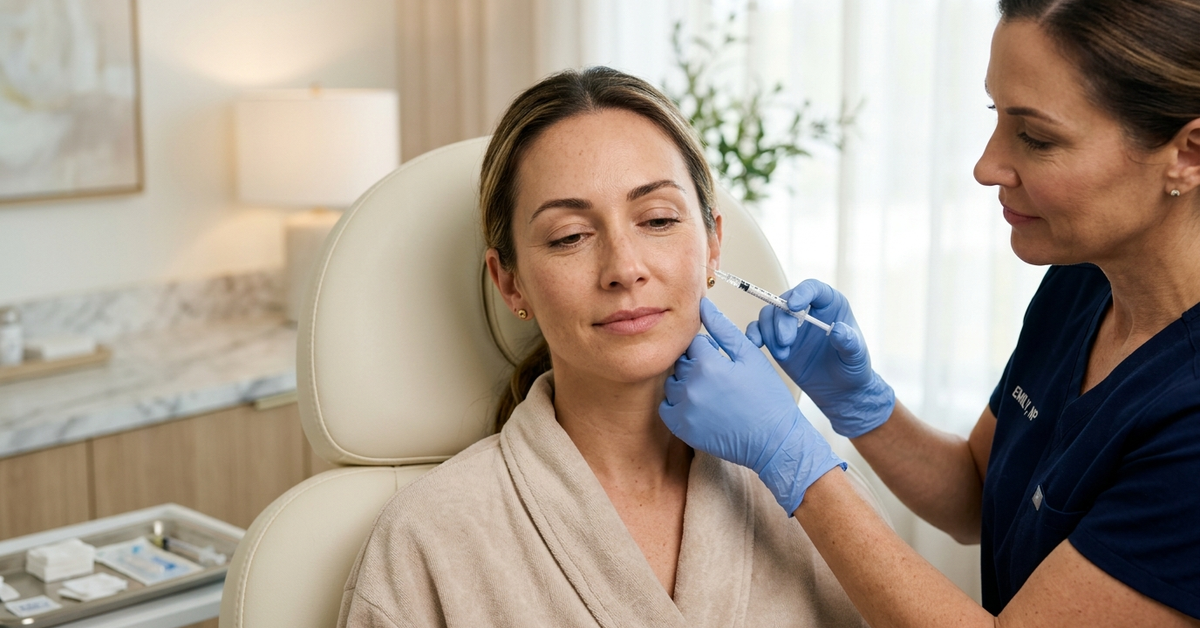
Beyond forehead lines, Botox treats frown lines (the 11s), crow's feet, bunny lines on the nose, a subtle brow lift, a gummy smile, a lip flip and perioral lip lines, chin dimpling, downturned mouth corners, jaw slimming (masseter), and neck bands (platysma) — nine-plus areas in all. Four are FDA-approved (glabellar/frown lines, crow's feet, forehead lines, and platysma bands); the rest are well-established off-label uses performed by experienced injectors.
9 Facial Areas Botox Treats Besides Forehead Lines
Most people associate Botox with forehead lines. But what areas of the face can Botox treat besides forehead lines? The answer spans nearly every region of the face and neck, from crow's feet and bunny lines to jaw slimming and platysmal bands.
Botox Cosmetic (onabotulinumtoxinA) is a neuromodulator that relaxes dynamic wrinkles by temporarily blocking nerve signals to targeted muscles. According to the American Academy of Family Physicians (AAFP), botulinum toxin injection has been the most commonly performed minimally invasive cosmetic procedure in the U.S. for more than two decades.
We will walk through each treatment area by facial region: upper face, mid-face, lower face, and neck.
Upper Face and Eye Region Treatments (Beyond Glabellar Lines)
Crow's feet, or periorbital lines, are an FDA-approved Botox indication. The treatment targets the orbicularis oculi muscle to soften lines at the outer corners of the eyes. The recommended dose is 24 Units (0.6 mL), with an Evidence Rating of A from the AAFP.
A chemical brow lift is an off-label use that targets brow depressor muscles for subtle eyebrow elevation. Patients seeking a more open, refreshed eye appearance often choose this without surgery.
Glabellar lines, the frown lines between your brows, are also FDA-approved. Botox targets the corrugator and procerus muscles, with a recommended dose of 20 Units (0.5 mL).
Temporary blepharoptosis (eyelid drooping) and eyebrow ptosis are technique-dependent risks. This is why choosing an experienced, certified injector matters. Our wrinkle relaxer treatments are administered by board-certified clinicians in a nurse-practitioner-led, physician-supervised setting.
Mid-Face and Nasal Treatments
Bunny lines are diagonal wrinkles that appear on the sides of your nose when you smile or scrunch. This off-label treatment targets the nasalis muscle to smooth those lines for a softer nasal appearance.
A nasal tip lift is another off-label use. Botox is injected into the depressor septi nasi muscle to subtly lift a downturned nasal tip, creating a more refined profile.
These are subtle refinements, not dramatic changes. Results will not match what surgical rhinoplasty can achieve. But for patients seeking minor adjustments without surgery, they offer a real option. Clinicians with thorough understanding of facial anatomy widely practice these off-label uses, as noted in clinical references such as UpToDate.
Perioral and Lower Face Treatments
The lip flip is an off-label technique where a small amount of Botox relaxes the orbicularis oris muscle. The upper lip rolls slightly outward for a fuller appearance. This complements but does not replace dermal fillers.
Smoker's lines, or vertical lip lines, are also treated off-label. Botox targets the orbicularis oris to smooth lines around the mouth caused by repetitive puckering or sun damage.
Gummy smile correction is an off-label treatment. Botox is injected into the levator labii superioris alaeque nasi muscle to reduce excessive gum show when smiling.
Downturned mouth corners are treated by relaxing the depressor anguli oris (DAO) muscle. This lifts the corners, softening a sad or tired expression.
Chin dimpling, sometimes called cobblestone chin, is an off-label treatment targeting the mentalis muscle. Botox smooths the dimpled, orange-peel texture of the chin.
Our clinicians often combine these treatments with options from our full range of aesthetic services for lower face rejuvenation.
Jawline and Neck Recontouring
Masseter reduction is an off-label cosmetic treatment that relaxes the masseter muscle to soften a square jawline. Botox can also provide therapeutic relief for teeth grinding and TMJ discomfort. This dual benefit makes it popular for patients seeking both aesthetic and functional improvement.
Platysmal neck bands received FDA approval in October 2024. BOTOX Cosmetic became the first botulinum toxin product approved for moderate to severe platysma bands. The recommended dose ranges from 26 to 36 Units depending on the number of bands treated, according to FDA prescribing information.
Relaxing the platysma muscle reduces visible vertical neck cords, contributing to a smoother, more youthful neck contour. We also address TMJ and jaw tension as part of our treatment approach.
How Botox Works: A Brief Overview
Botulinum toxin type A inhibits acetylcholine release at the neuromuscular junction. It does this by cleaving SNAP-25, a protein essential for releasing acetylcholine from nerve endings. This temporarily blocks nerve signals to targeted muscles, according to DailyMed drug information.
The result is localized muscle relaxation that smooths overlying skin and reduces dynamic wrinkles. Effects typically take 2 weeks to fully develop and last approximately 3 to 4 months, per the AAFP.
Botox treats dynamic wrinkles (caused by muscle movement) more effectively than static wrinkles (visible at rest) or wrinkles caused by loss of skin elasticity. Patients aged 30 to 50 often see the most benefit, while older patients may need complementary treatments for skin laxity, according to UpToDate.
FDA-Approved vs. Off-Label Uses for Facial Botox
BOTOX Cosmetic carries FDA approval for four facial areas: glabellar lines, lateral canthal lines (crow's feet), forehead lines, and platysma bands. The October 2024 label update added forehead lines and platysma bands as newly approved indications.
Off-label but commonly treated areas include bunny lines, chemical brow lift, lip flip, smoker's lines, gummy smile, downturned mouth corners, chin dimpling, masseter reduction, and nasal tip lift.
The term "off-label" means the FDA has not specifically approved that use. It does not mean the treatment is unsafe. Experienced clinicians with strong anatomical knowledge widely practice these applications.
Among neuromodulators, only BOTOX Cosmetic carries these broader approvals. Other products are FDA-approved only for glabellar lines. This is why consulting a qualified, board-certified injector matters for all treatments, especially off-label ones. At Purely Medspa, we use only FDA-approved products sourced directly from manufacturers.
Safety Considerations and Potential Side Effects
Botulinum toxin has a well-established safety profile when administered by qualified professionals. Common mild side effects include temporary bruising, swelling, or redness at the injection site.
Technique-dependent complications such as temporary blepharoptosis (eyelid drooping) and eyebrow ptosis can occur. The AAFP notes that incidence declines as injector skill improves. Choosing a skilled injector focused on natural-looking results minimizes these risks.
Contraindications include keloidal scarring, neuromuscular disorders such as myasthenia gravis, and allergy to product constituents.
Our approach to safety sets us apart. Purely Medspa is nurse-practitioner led and physician supervised with board-certified clinicians. We operate on a zero-commission model, meaning our clinicians recommend only necessary treatments. All treatments are documented with standardized photography and written plans provided to patients. The same injector who plans your treatment performs it, ensuring consistency and accountability. We do not treat on consultation day unless you request it, giving you time to make an informed decision.
Other Neuromodulators: Alternatives to Botox
Dysport (abobotulinumtoxinA) is FDA-approved for glabellar lines. It is known for slightly faster onset and more diffusion, which can be advantageous for larger areas.
Xeomin (incobotulinumtoxinA) is also FDA-approved for glabellar lines. It is a "naked" toxin without accessory proteins, which may reduce antibody formation risk.
Daxxify (daxibotulinumtoxinA-lanm) is a longer-lasting formulation. Clinical studies suggest results may last up to 6 months versus the typical 3 to 4 months for other neuromodulators.
Jeuveau (prabotulinumtoxinA) is FDA-approved for glabellar lines and is a newer entrant sometimes called "Newtox." At Purely Medspa, we offer Botox, Dysport, Xeomin, and Daxxify. A practitioner can advise on the best option for your individual needs based on treatment area, desired onset, and duration. Learn more about our Botox options in Back Bay.
Conclusion: Personalized Treatment for Facial Rejuvenation
Botox offers remarkable versatility for facial rejuvenation beyond forehead lines. From crow's feet and bunny lines to jaw slimming and neck bands, the range of treatable areas continues to expand.
Treatment plans should always be customized to your individual anatomy, goals, and muscle activity patterns. Consulting with a qualified, experienced medical professional is essential, especially for off-label treatments.
At Purely Medspa in Back Bay, Boston, our nurse-practitioner-led team creates personalized, documented treatment plans with a no-pressure consultation process. We use only FDA-approved products sourced directly from manufacturers, and the same injector who plans your treatment performs it. Learn more about our clinic, then schedule a no-pressure consultation where a nurse-practitioner will build a treatment plan tailored to your facial anatomy and goals.
This article was written by the clinical team at Purely Medspa, a nurse-practitioner-led, physician-supervised medical aesthetics clinic in Back Bay, Boston, specializing in FDA-approved injectable treatments and personalized care.
- Botox treats nine or more facial areas beyond forehead lines, including crow's feet, bunny lines, lip lines, chin dimpling, and platysmal bands.
- Four areas carry FDA approval: glabellar lines, crow's feet, forehead lines, and platysma bands.
- Off-label uses are widely practiced by experienced clinicians with strong anatomical knowledge.
- Results last 3 to 4 months for most neuromodulators; Daxxify may last up to 6 months.
- Choosing a board-certified, experienced injector is critical for safety and natural-looking results.
Frequently asked
Can Botox be used on areas other than the forehead?
How long does Botox last?
What age group benefits most from Botox?
What are the common side effects of Botox?
Who should not get Botox?
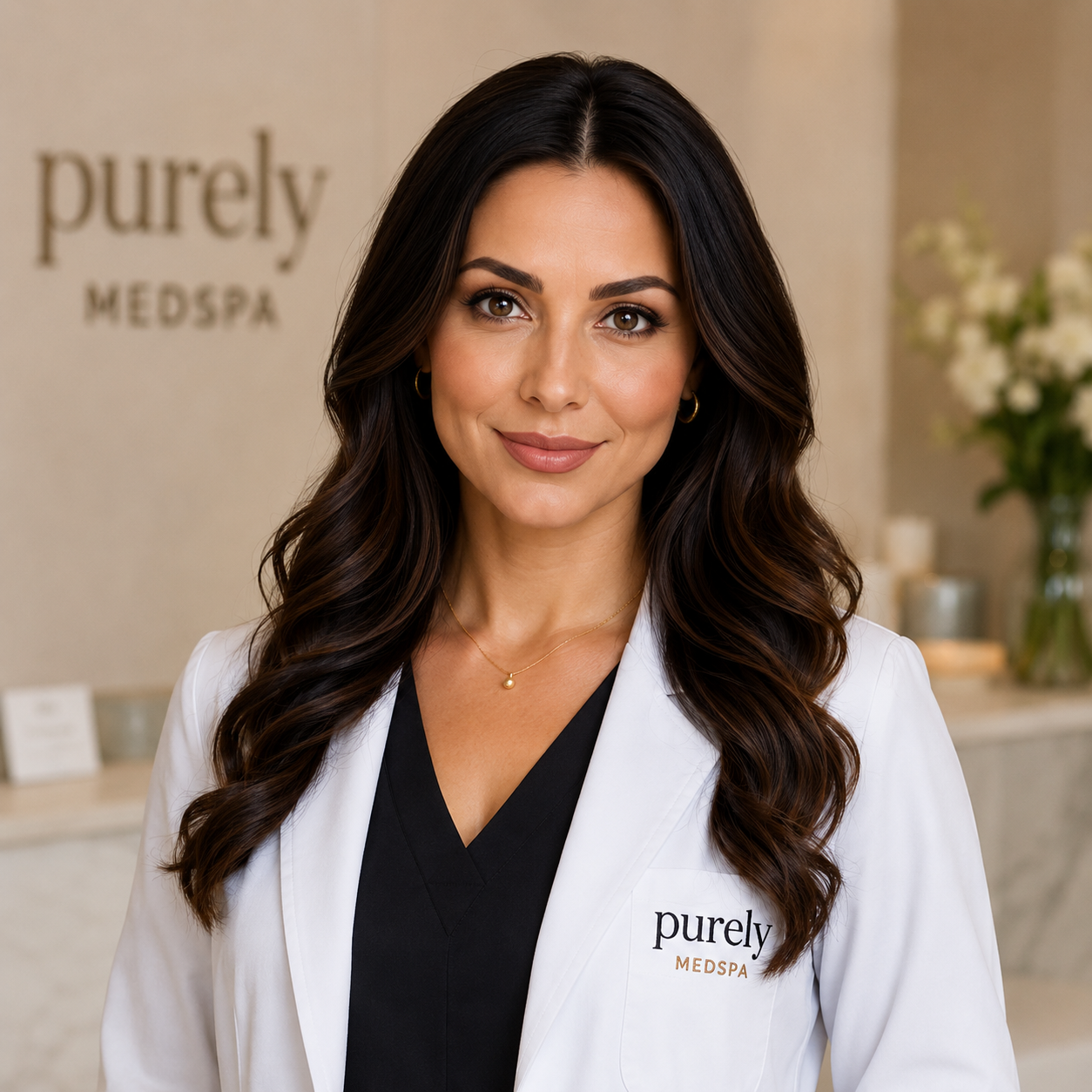
Dr. Bella Brooks is a medical aesthetics physician at Purely Medspa in Boston, focusing on facial aesthetics, injectables, treatment planning, and natural-looking aesthetic results.
Want your own number?
A free thirty-minute consult ends with a written map: your zones, your unit counts, and a total. No obligation to book anything.